Bookings and Lead Management
Text Message Follow Up After Service That Feels Personal
Use text message follow up after service to check the work, clarify next steps, and make it easier for customers to respond.

The job is done, but the day is not
Text message follow up after service can be the difference between a finished job and a customer left wondering what happens next. You have just packed up, the next appointment is approaching, and a customer’s question arrives while you are driving to the next stop. You mean to respond later, but the day keeps moving.
A useful follow up does not need to sound like a sales script. It should show that you remember the customer, make it easy to raise a concern, and explain any next step. A simple, well timed message can do that without asking the customer to chase you.
Decide what each message needs to do
Before writing a template, choose its purpose. Are you checking that the customer is satisfied with the work? Sharing care instructions? Confirming what is still to be completed? Keep each message focused on one reason for getting in touch, so the customer can understand it at a glance.
Write as you would speak in person: friendly, specific, and calm. Refer to the service in plain language, then invite a reply. Avoid promises about outcomes you cannot control. If the customer needs to book another visit, explain the next step rather than assuming they know how to arrange it.
Make room for a real reply
A follow up works best as a conversation, not a broadcast. Give the customer a clear way to tell you if something needs attention. If they raise an issue, acknowledge it before offering a solution, and be honest about when you can look into it. If the matter needs a call or a visit, say so and agree on how to continue.
Set a routine for checking replies, especially when the team is busy. Decide who will take ownership of a message and how an open question will be handed over. This keeps the customer from having to repeat the story when a different team member responds.
Build a small, useful message routine
Start by drafting a short check in, a message for sharing practical next steps, and a response for arranging a follow up visit. Read each one aloud. Remove anything that sounds stiff, then make sure it does not imply a service, price, or appointment that has not been confirmed.
Choose a consistent point in your process to send the check in, such as after the work is complete and you have confirmed the details. Keep notes about what still needs attention in the same place your team manages customer conversations. Review the wording when your process changes, so the message stays accurate.
Keep follow through connected to the conversation
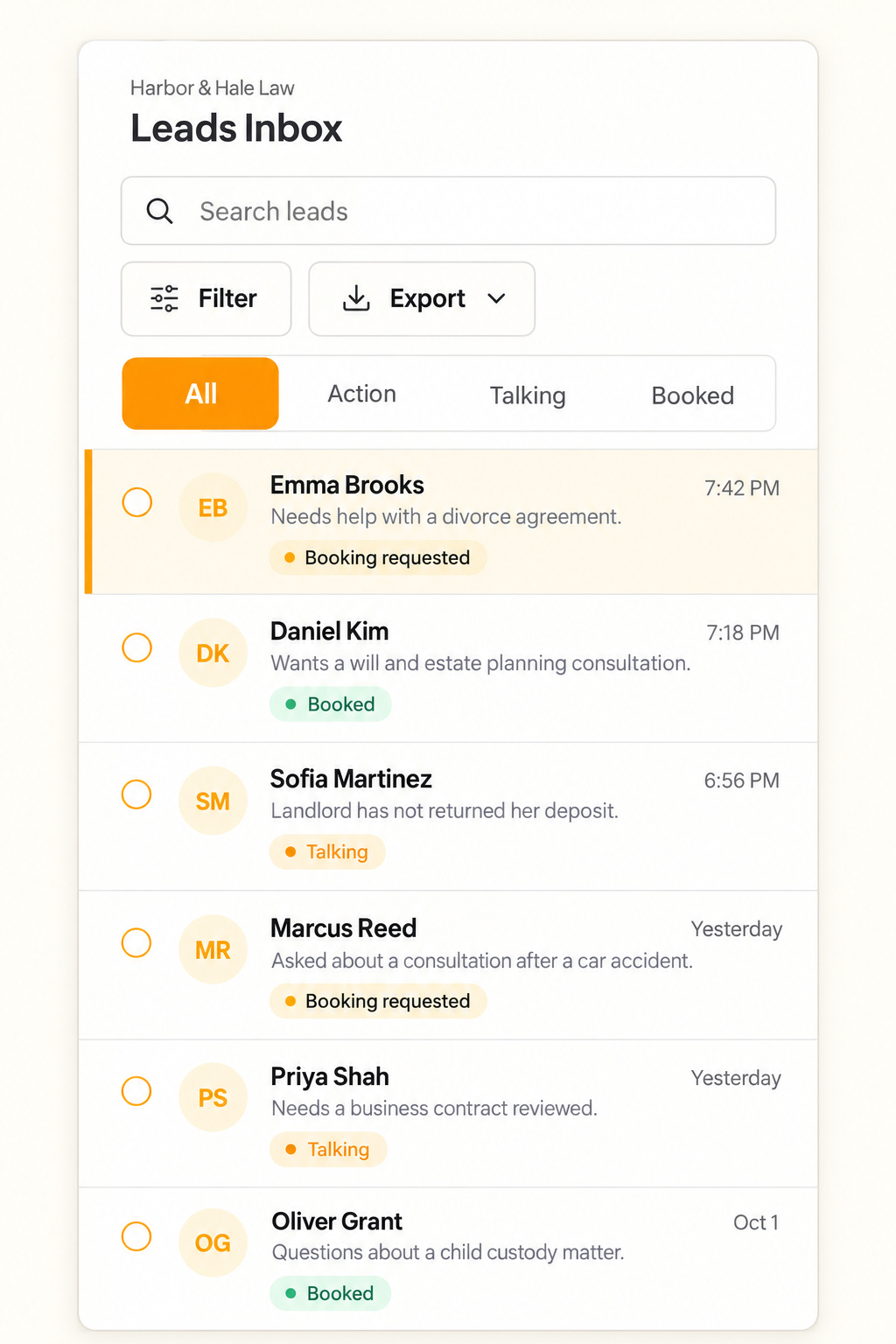
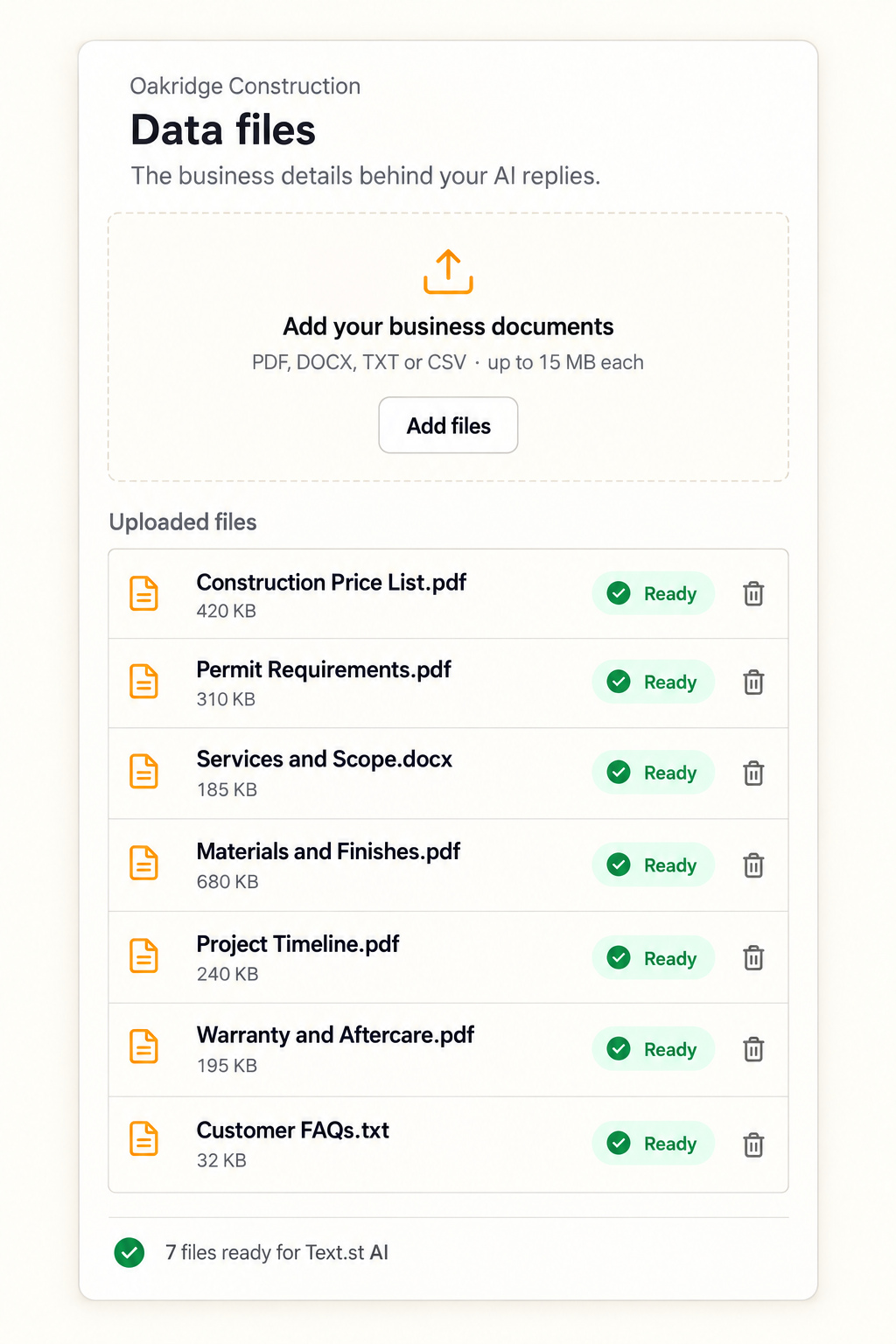
Text.st gives your business an activated phone number customers can text directly. Its AI replies using the business knowledge you provide through website pages and uploaded documents. A shared Inbox shows conversations to the team, and team members can reply, while leads and contacts are kept in the Inbox and CRM for follow up. Mobile access supports team collaboration when work takes you away from a desk.
You can try AI replies with Test Drive before going live. Where your business configures bookings, bookings can be supported. Text.st can also send review requests and booking reminders by text, and assists with messaging certification where it is required. Messaging usage and carrier charges are separate from the subscription. Make customer follow up easier to organize and give customers a clear way to reply. Get your business texting number with Text.st.
Common questions
What should I include in a post service check in text?Name the service in plain language, ask whether everything is working as expected, and make it easy to reply with a concern. Include a next step only when it is confirmed. Keep the message focused, so the customer can quickly understand why you are writing and what kind of response would help.
When should I send a follow up after a service visit?Choose a point when the work is complete and you can accurately describe what happened. For work that needs time before a customer can assess the result, consider when they will have enough information to respond. Use a consistent process, and avoid promising a check in at a time your team cannot meet.
How can a team avoid losing a customer reply?Agree on who checks incoming messages, who owns an open issue, and how that responsibility is handed over. Keep the customer conversation accessible to the team rather than relying on one person’s memory. With Text.st, the shared Inbox shows every conversation to the team, and team members can reply.