Industry Playbooks
Plumbing Leads: Handle Urgent Requests Without Guesswork
Handle urgent plumbing leads with clear priority checks, honest availability updates, and practical text follow up before a customer keeps searching.

Give the next leak inquiry a clear path
Keep urgent plumbing leads moving while your hands are full. You are packing tools after a repair when a message arrives: water is spreading under a customer’s sink. They want to know whether you can come now. You still need to finish the job in front of you.
The useful response is not a rushed arrival promise. It is a clear path from reported problem to a decision about help. Separate understanding the situation from confirming a visit, so the customer knows what is actually happening.
Check what is happening now
Start with the current condition, not a long questionnaire. Ask whether water is still flowing, whether the affected fixture is usable, and whether the situation has changed since the customer first contacted you. A contained leak and an active overflow call for different decisions.
Keep remote assessment within your limits. Do not diagnose hidden damage from a short text or suggest that a customer enter an unsafe area. If they report immediate danger, direct them toward appropriate emergency help rather than asking them to wait in your inquiry queue.
Confirm capacity before offering arrival
Give someone responsibility for checking whether your team can take the urgent job. That person should verify the available plumber, travel constraints, and whether the reported problem fits the work your business handles.
Until that check is complete, make the distinction plain: “We are checking whether a plumber can attend. Your visit is not confirmed yet.” If you cannot help, say so promptly. Leaving an urgent customer waiting for an answer you already know does not help either side. Avoid vague assurances such as “We should be there soon.”
Follow up on the decision
Before returning to your tools, leave a clear next action for the person handling the inquiry. The useful question is whether the customer still needs help, not simply whether they saw your message.
Try: “Do you still need a plumber for the active leak, or has the situation changed?” Reassess if the problem has worsened. If the customer found another plumber, close the inquiry courteously instead of continuing to chase it. Today, review your open urgent inquiries and identify which ones need a capacity decision rather than another generic check in.
Put the conversation where your team can act
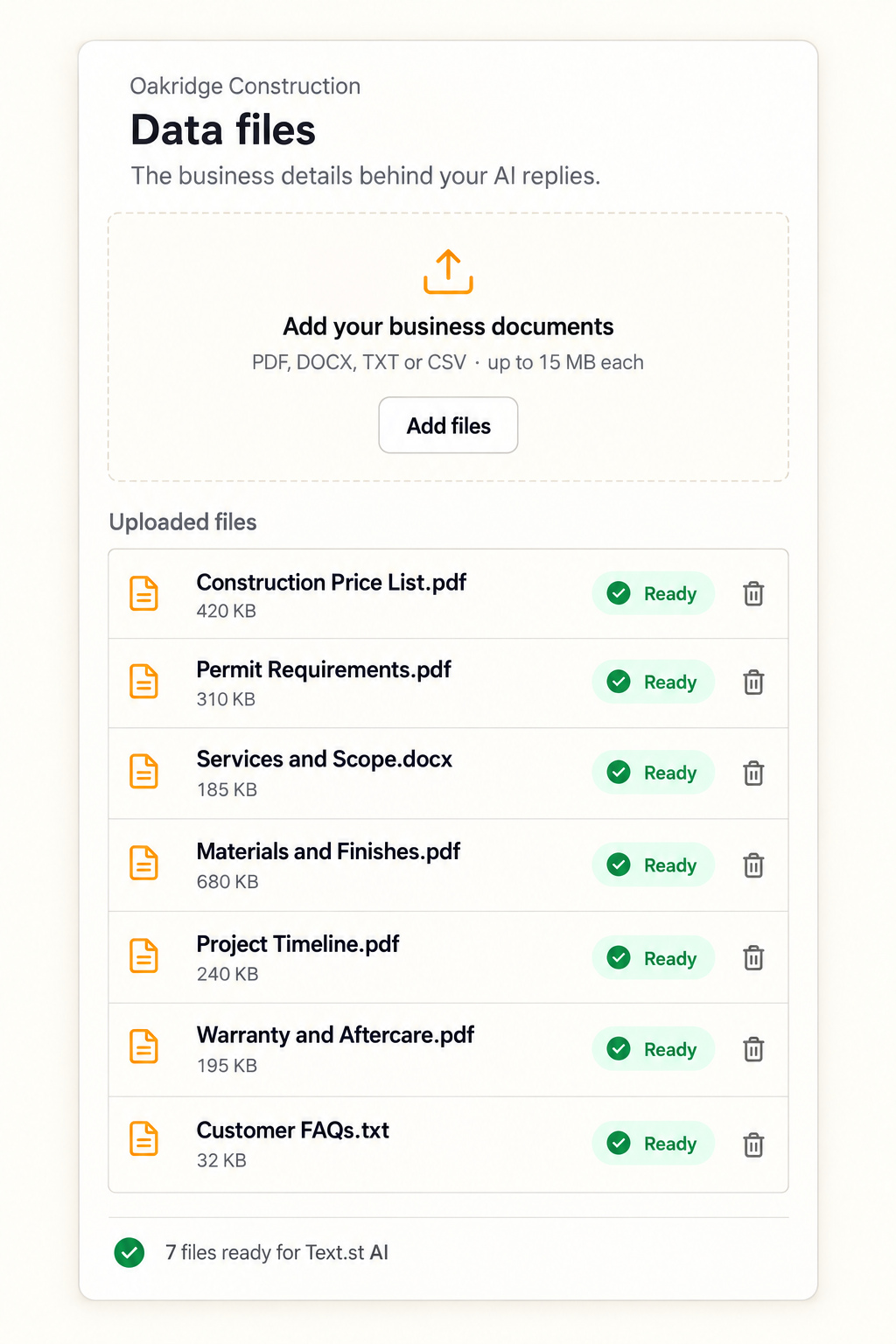
Text.st gives your business an activated phone number customers can text directly. Its AI replies using the business knowledge you provide through website pages and uploaded documents. Use Test Drive before going live to try replies about urgent requests.
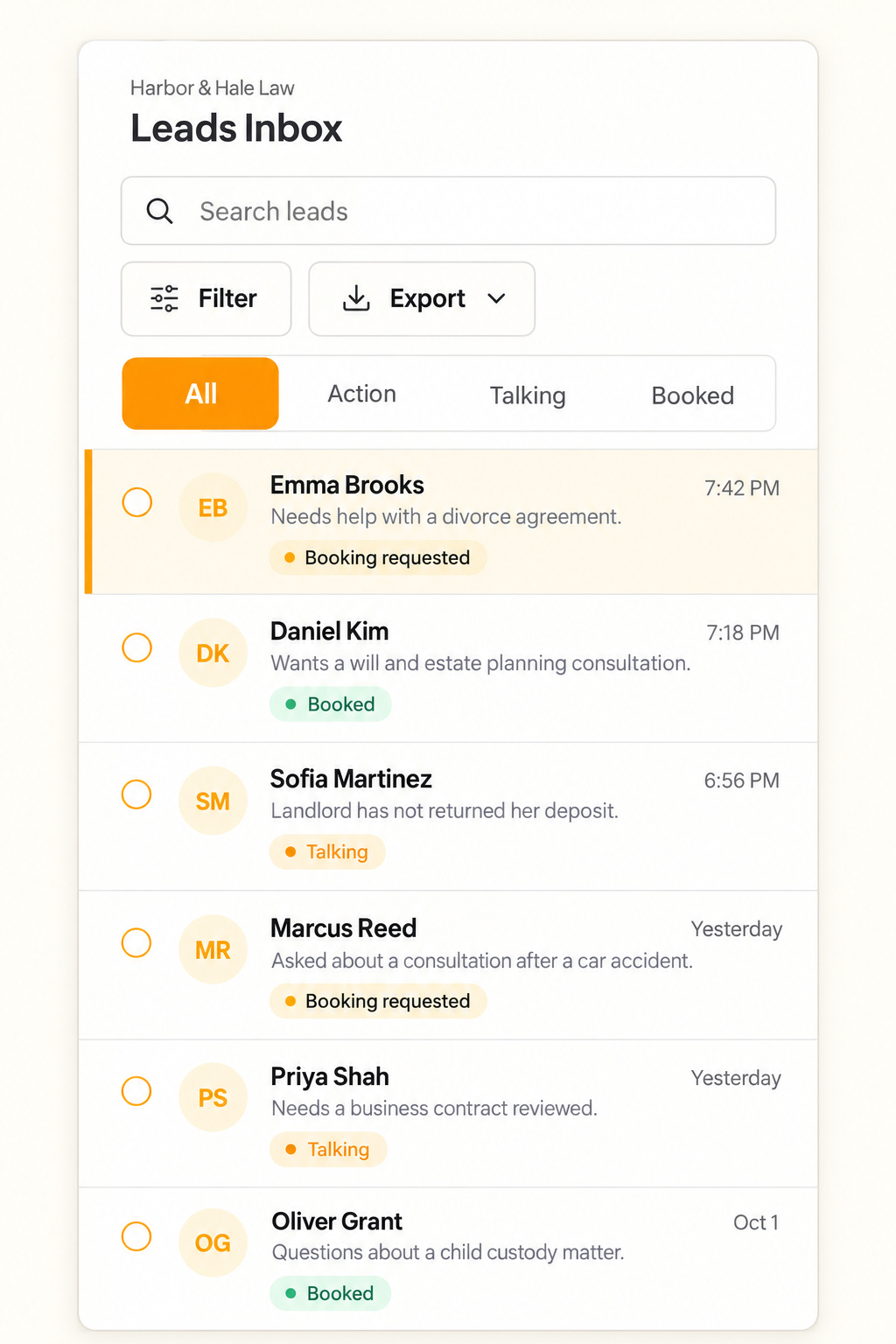
The shared Inbox shows every conversation to your team, and team members can reply. Leads and contacts stay in the Inbox and CRM for follow up. Keep arrival decisions grounded in your team’s actual availability. Messaging certification may be required before business texting, and Text.st assists with that process.
Get your business texting number with Text.st. Sign up at https://app.text.st/auth.
Common questions
What should I ask when a customer texts about an active leak?Ask whether water is still flowing, whether the affected fixture is usable, and whether conditions are changing. Use those answers to decide who should review the request next. Avoid diagnosing the cause by text or directing the customer into an unsafe area.
What should I say if I cannot confirm a plumber yet?Say that you are checking availability and that a visit is not confirmed. Have a team member verify capacity before offering an arrival time. If you already know you cannot take the job, tell the customer promptly so they can seek another provider.
How should I follow up if an urgent plumbing lead stops replying?Ask whether the customer still needs help and whether the situation has changed. Do not treat silence as a confirmed visit. If they found another plumber, close the inquiry courteously. If they respond with worsening conditions, reassess the request before discussing availability.