AI Customer Conversations
Keep Your AI Text Message Responder Accurate
Keep your ai text message responder accurate with practical checks for routine replies, unclear questions, and changes to your business information.

Keep the answer true to your shop
Keep routine answers grounded while your hands are busy. You are adjusting a bike brake when a customer texts, “Can you install a part I bought elsewhere?” An ai text message responder can help answer using your business information, but the answer needs to match your actual policy, including its limits.
The useful question is not whether a reply sounds friendly. It is whether a customer could act on it without getting the wrong impression. Make accuracy something you check, rather than something you assume after setup.
Check the claim, not just the tone
Choose a routine question and read the reply as a customer would. Underline each factual claim: what you accept, what you provide, and what depends on a staff review. Match each claim to your current business information.
For the bike part question, a broad “Yes, bring it in” could hide an important condition. Perhaps installation depends on compatibility. Your check should ask whether that condition survived in the answer. A polished sentence is not a substitute for a correct explanation of what the shop can actually do.
Try questions with missing details
Customers rarely use the exact wording on your website. Test a plain question, a vague version, and a version that suggests an exception. “You install any part, right?” is a useful challenge because it invites an answer broader than your policy.
Look for unsupported certainty. When the information does not settle the question, the safer answer identifies what still needs checking instead of inventing a rule. Write down what an acceptable reply should communicate so your team can judge answers consistently, without relying on whether they sound convincing.
Retest when the facts change
Keep a small set of questions you can reuse after a policy or service change. Include the wording that previously produced an incomplete answer. This turns an occasional correction into a repeatable accuracy check.
Give someone responsibility for comparing answers with current business information. If a reply is wrong, check whether the underlying source is outdated, contradictory, or silent on that point. Correct the source before testing again. Review real conversations too, looking for places where customers misunderstood a condition even though the wording seemed clear to your team.
Put the checks into practice
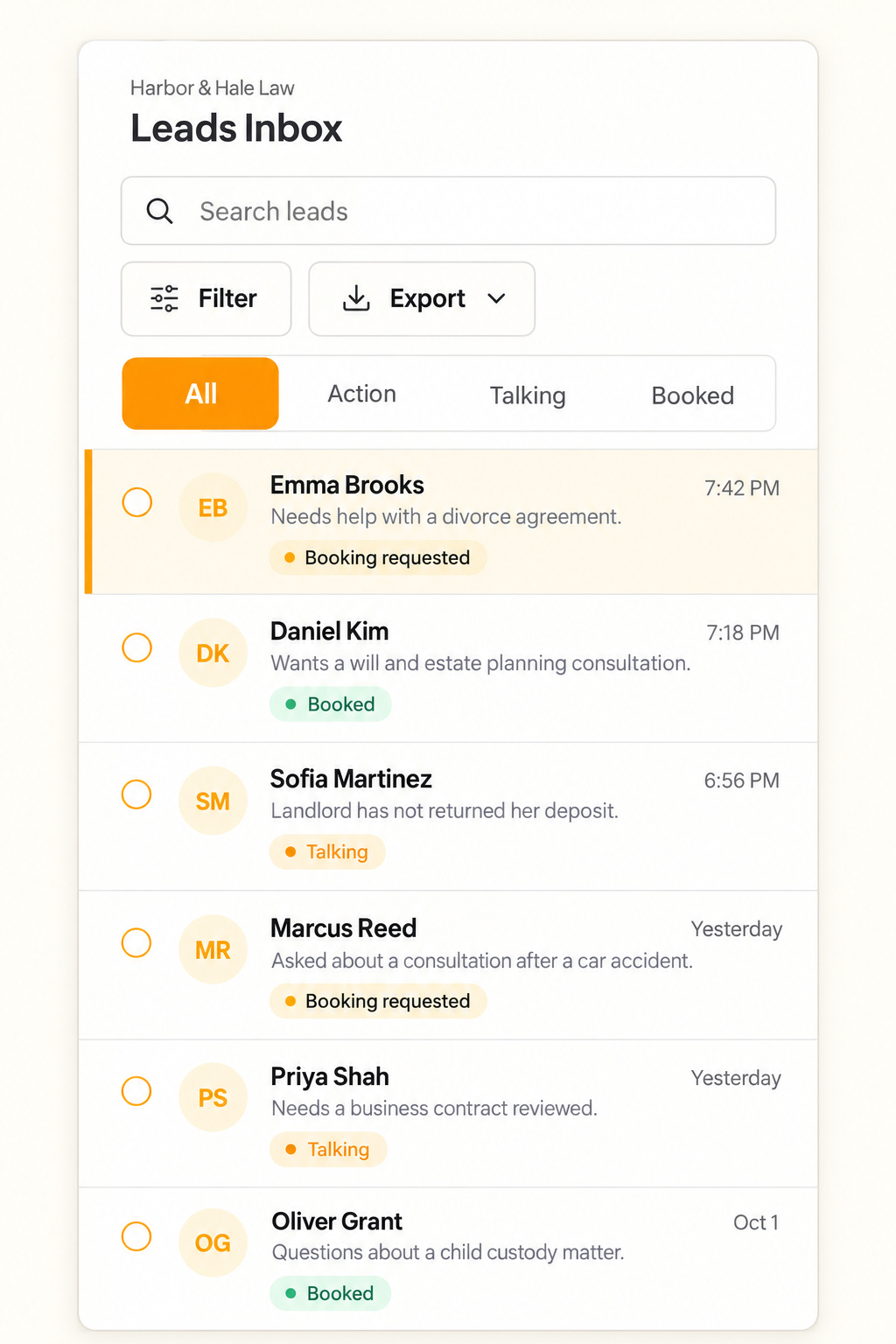
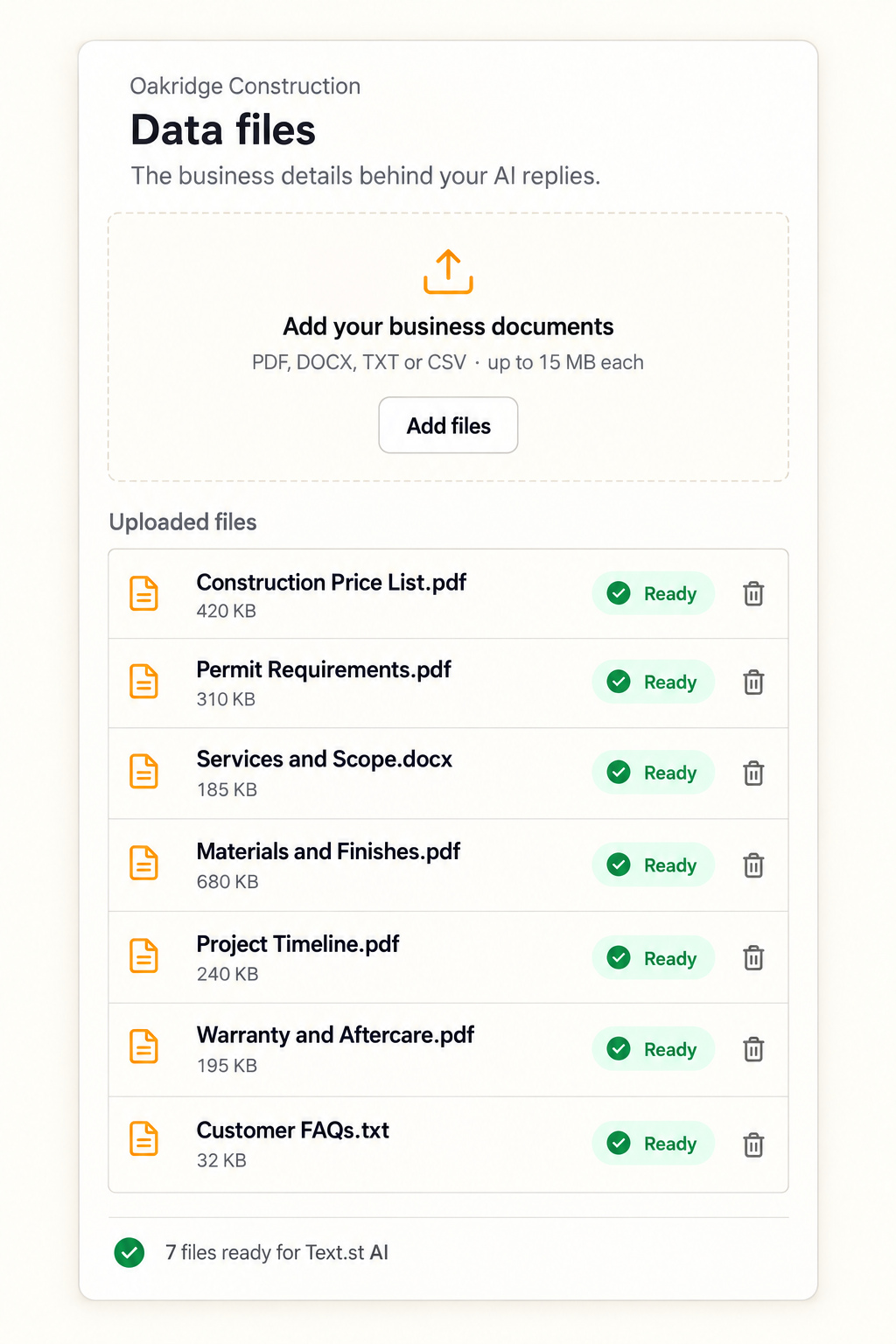
Text.st AI replies using business knowledge you provide. Business Knowledge lets you teach it with website pages and uploaded documents. Test Drive lets you try its replies before going live, and the shared Inbox shows every conversation to your team, whose members can reply.
Start with a routine question and compare the answer with your current policy in Test Drive. Messaging certification is required before business texting in some countries; Text.st assists with that process. [Get your business texting number with Text.st.](https://app.text.st/auth)
Common questions
How can I tell whether an AI reply is accurate?Compare every factual statement with your current business information. Check conditions as carefully as the main answer. If your policy says a service depends on inspection, an answer that simply says yes is incomplete, even when its wording sounds helpful.
What should I do when an answer includes something my policy never says?Treat the added detail as unsupported, not as a new business rule. Check whether another source contradicts your policy or leaves room for interpretation. Clarify the business information, then try the question again. Have a team member address any customer misunderstanding.
Can I check Text.st replies before customers use the number?Yes. Test Drive lets you try your AI replies before going live. Use questions with clear answers and questions that need qualification. Compare the replies with the website pages and uploaded documents you provide through Business Knowledge, then address any gaps.